'%3e%3cpath%20d='M45.5%2040.68C49.5206%2040.68%2052.78%2037.5997%2052.78%2033.8C52.78%2030.0003%2049.5206%2026.92%2045.5%2026.92C41.4794%2026.92%2038.22%2030.0003%2038.22%2033.8C38.22%2037.5997%2041.4794%2040.68%2045.5%2040.68Z'%20fill='%231664FF'/%3e%3cpath%20d='M45.5%2061.32C49.5206%2061.32%2052.78%2058.2397%2052.78%2054.44C52.78%2050.6403%2049.5206%2047.56%2045.5%2047.56C41.4794%2047.56%2038.22%2050.6403%2038.22%2054.44C38.22%2058.2397%2041.4794%2061.32%2045.5%2061.32Z'%20fill='%231664FF'/%3e%3cpath%20d='M45.5%2040.68V47.56'%20stroke='%231664FF'%20stroke-width='2'/%3e%3cpath%20d='M45.5%2081.96C49.5206%2081.96%2052.78%2078.8797%2052.78%2075.08C52.78%2071.2803%2049.5206%2068.2%2045.5%2068.2C41.4794%2068.2%2038.22%2071.2803%2038.22%2075.08C38.22%2078.8797%2041.4794%2081.96%2045.5%2081.96Z'%20fill='%231664FF'/%3e%3cpath%20d='M45.5%2061.32V68.2'%20stroke='%231664FF'%20stroke-width='2'/%3e%3cpath%20d='M83.4561%207.3894H7.54388C3.02067%207.3894%20-0.646118%2010.8547%20-0.646118%2015.1294V86.8706C-0.646118%2091.1453%203.02067%2094.6106%207.54388%2094.6106H83.4561C87.9793%2094.6106%2091.6461%2091.1453%2091.6461%2086.8706V15.1294C91.6461%2010.8547%2087.9793%207.3894%2083.4561%207.3894Z'%20stroke='%231664FF'%20stroke-width='5'%20stroke-linejoin='round'/%3e%3c/g%3e%3cdefs%3e%3cclipPath%20id='clip0_0_1'%3e%3crect%20width='91'%20height='86'%20fill='white'%20transform='translate(0%208)'/%3e%3c/clipPath%3e%3c/defs%3e%3c/svg%3e) TameChaos
TameChaos Design your system in TameChaos Studio. Run it on the edge.
Four products, one shared core
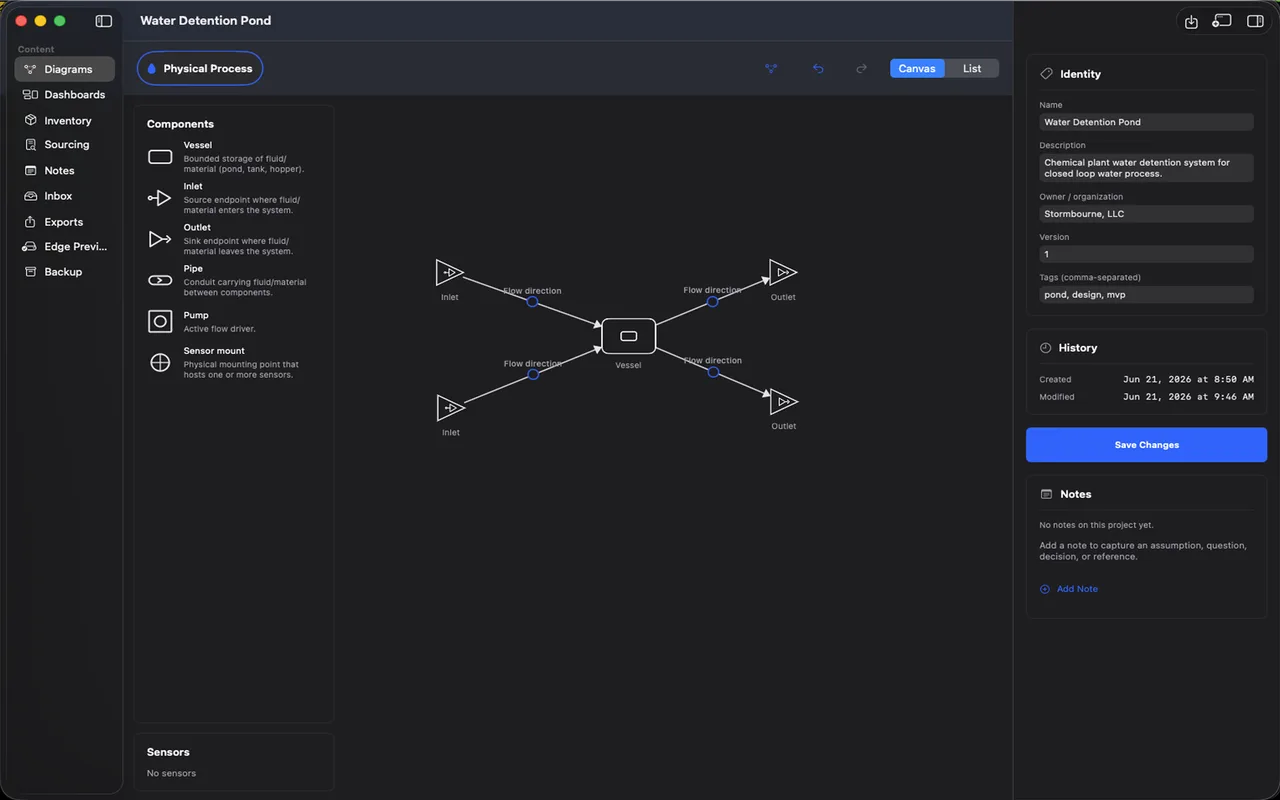
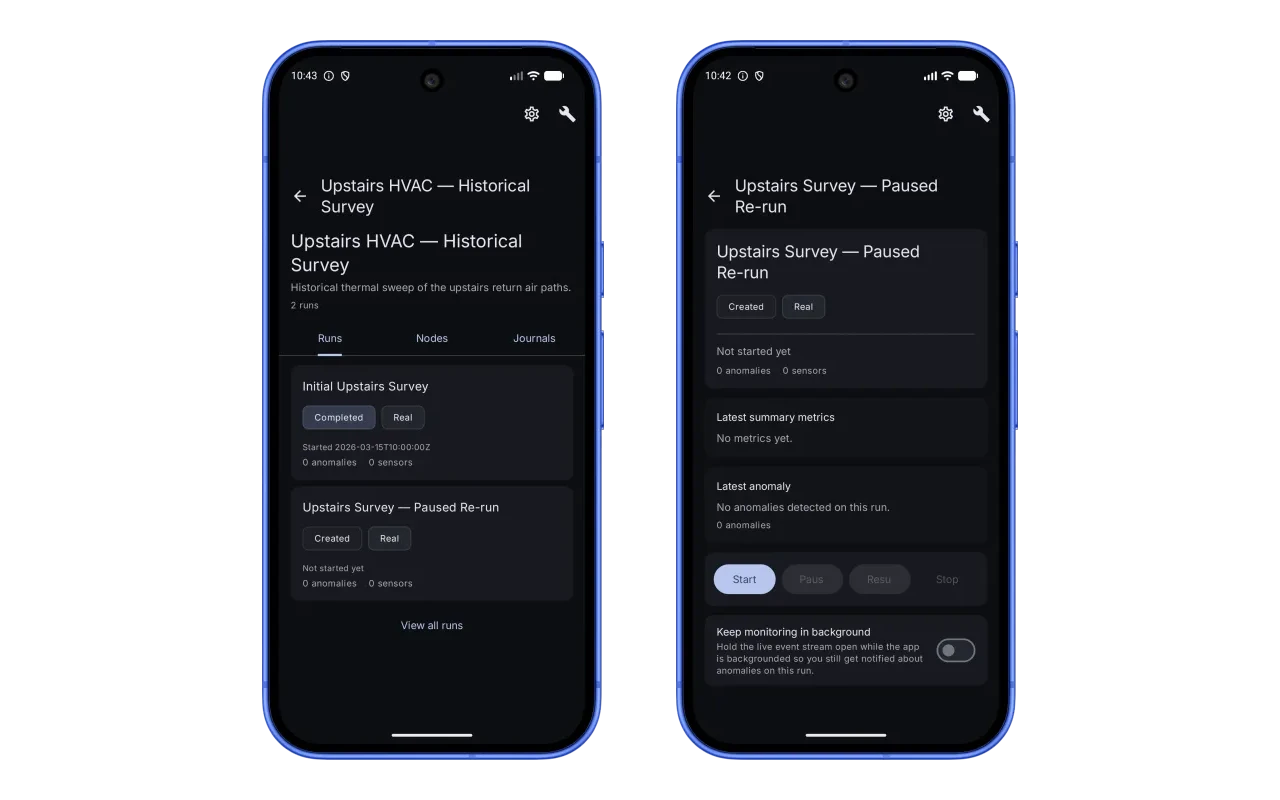
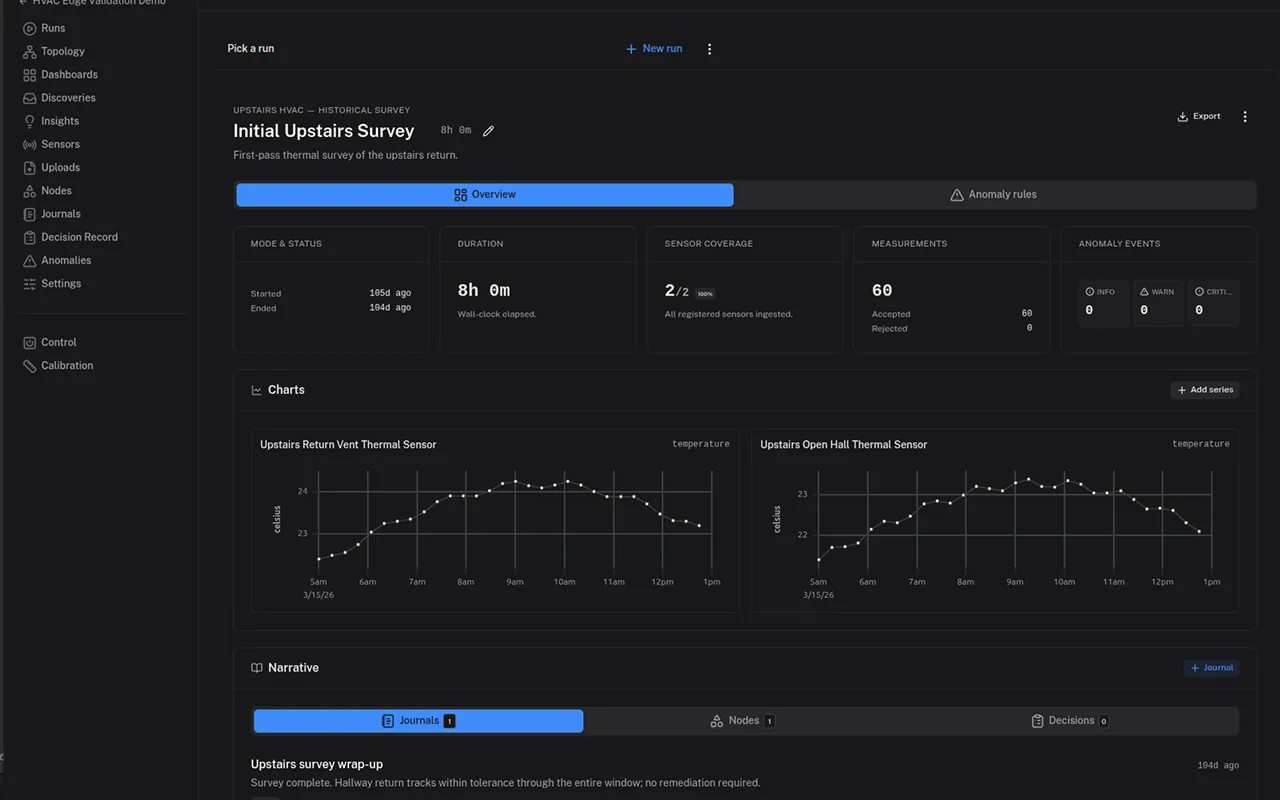
Studio stands alone — and so does Field. Studio is useful before any edge server exists: model topology, document the system, mock up HMI views, prepare what you'll build. Field is standalone too — it authors a real Studio project on site with no server, no Mac, and no network. The Edge companion is a capability a project can pick up later, never a precondition.
Why Studio leads, and what it doesn't mean
Studio comes first because it's the most common starting point — the edge is reordered in sequence, not in importance, and it remains the authoritative runtime. Studio owns design-time authority; the runtime owns execution; the two meet at a project package that describes itself. A design never overrules what a running system measures.
Design → Run → Improve
- DesignModel the system in Studio: topology, facilities, operator HMI views, and symbols drawn to be compatible with ISA-5.1 and IEC 60617. The first release adds the bill of materials and budgetary costs that fall out of the design.
- RunExecute experiments and simulations on the edge — against real hardware, a simulated system, or a hybrid of both. The edge owns execution.
- ImproveAggregate like-processes across your own fleet and compare them edge to edge. Refining the physics and inference models from that data is the next phase.
From the systems model to the measured result
Built for sensor-driven systems
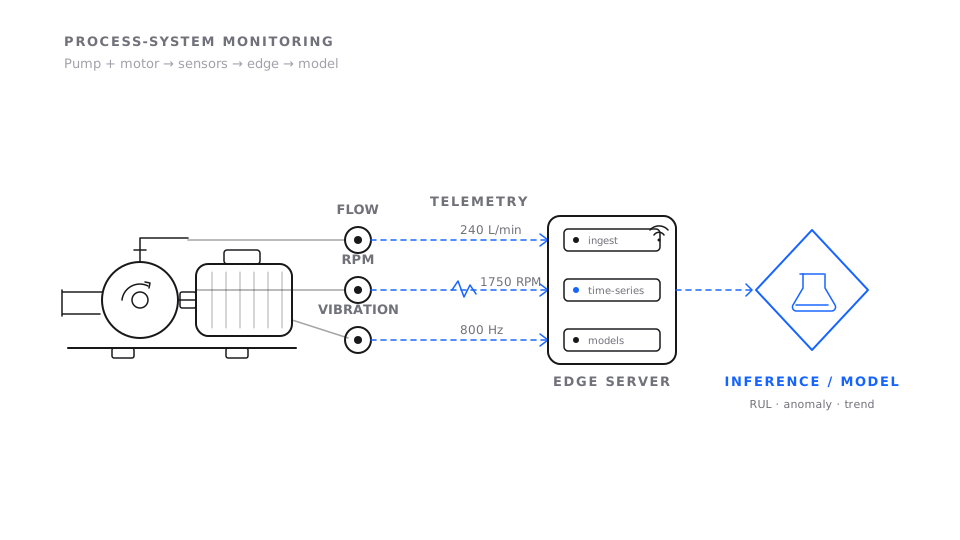
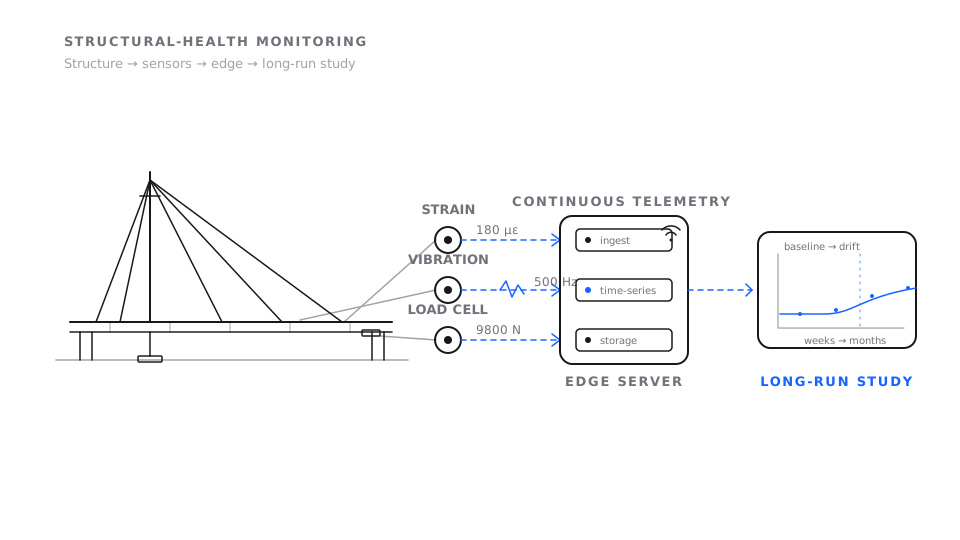
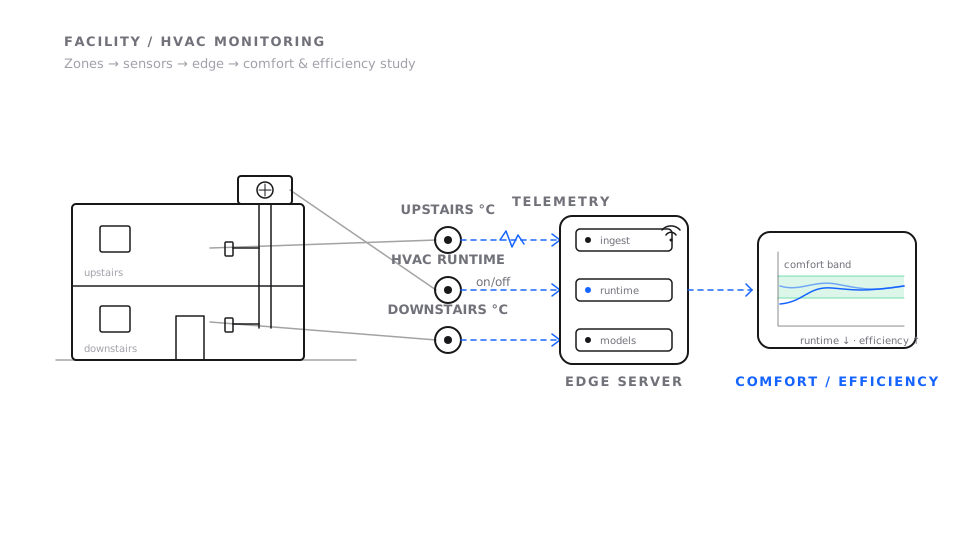
Not a SCADA or DCS replacement
It isn't a P&ID editor either. Standards-conformant symbols make a drawing faithful to the conventions your discipline already reads — they don't turn a design and documentation environment into a P&ID tool, and “compatible with ISA-5.1” is never “certified to it”.
Compare deployments. Improve models.
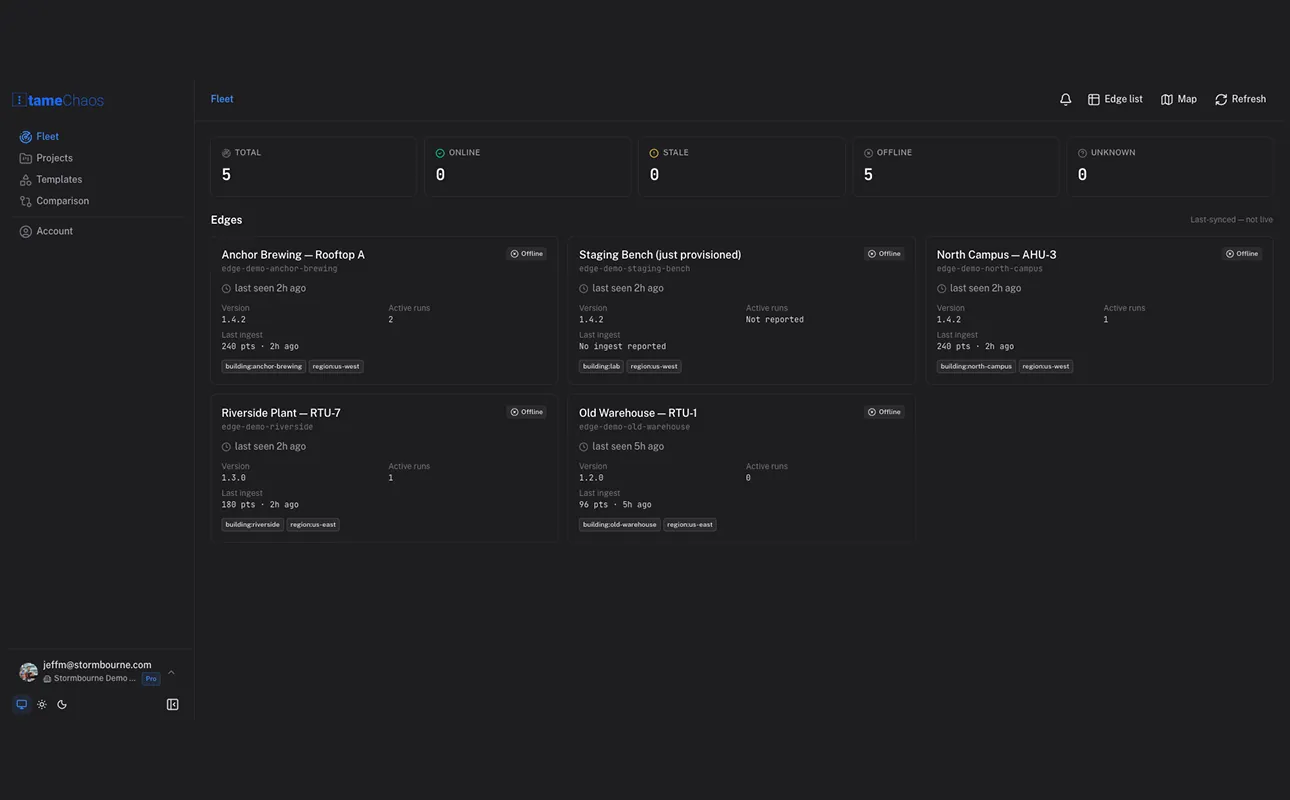
- OverseeA registry of your fleet: which edges exist, their status, version, and active runs.
- AggregateGroup like-processes across edges into comparable sets — the join key for everything downstream.
- ImproveRefine physics and inference models from aggregated like-process data. (Model-loop phase — on the roadmap.)
- DistributePublish improved templates and models back for your edges to pull and adopt — never pushed, never commanded. (Roadmap.)