'%3e%3cpath%20d='M45.5%2040.68C49.5206%2040.68%2052.78%2037.5997%2052.78%2033.8C52.78%2030.0003%2049.5206%2026.92%2045.5%2026.92C41.4794%2026.92%2038.22%2030.0003%2038.22%2033.8C38.22%2037.5997%2041.4794%2040.68%2045.5%2040.68Z'%20fill='%231664FF'/%3e%3cpath%20d='M45.5%2061.32C49.5206%2061.32%2052.78%2058.2397%2052.78%2054.44C52.78%2050.6403%2049.5206%2047.56%2045.5%2047.56C41.4794%2047.56%2038.22%2050.6403%2038.22%2054.44C38.22%2058.2397%2041.4794%2061.32%2045.5%2061.32Z'%20fill='%231664FF'/%3e%3cpath%20d='M45.5%2040.68V47.56'%20stroke='%231664FF'%20stroke-width='2'/%3e%3cpath%20d='M45.5%2081.96C49.5206%2081.96%2052.78%2078.8797%2052.78%2075.08C52.78%2071.2803%2049.5206%2068.2%2045.5%2068.2C41.4794%2068.2%2038.22%2071.2803%2038.22%2075.08C38.22%2078.8797%2041.4794%2081.96%2045.5%2081.96Z'%20fill='%231664FF'/%3e%3cpath%20d='M45.5%2061.32V68.2'%20stroke='%231664FF'%20stroke-width='2'/%3e%3cpath%20d='M83.4561%207.3894H7.54388C3.02067%207.3894%20-0.646118%2010.8547%20-0.646118%2015.1294V86.8706C-0.646118%2091.1453%203.02067%2094.6106%207.54388%2094.6106H83.4561C87.9793%2094.6106%2091.6461%2091.1453%2091.6461%2086.8706V15.1294C91.6461%2010.8547%2087.9793%207.3894%2083.4561%207.3894Z'%20stroke='%231664FF'%20stroke-width='5'%20stroke-linejoin='round'/%3e%3c/g%3e%3cdefs%3e%3cclipPath%20id='clip0_0_1'%3e%3crect%20width='91'%20height='86'%20fill='white'%20transform='translate(0%208)'/%3e%3c/clipPath%3e%3c/defs%3e%3c/svg%3e) TameChaos
TameChaos Products
The TameChaos ecosystem
Studio is the experimental design system. Field takes the same core to the floor on Android. The edge runs what you designed, and the cloud oversees your fleet. Four distinct products on one shared core — adopt one or all, in any order.
The products
Four products, one shared core
Studio leads because it's where most people start — that's emphasis, not a sequence. Each product stands on its own and has its own page; begin with whichever fits your work.
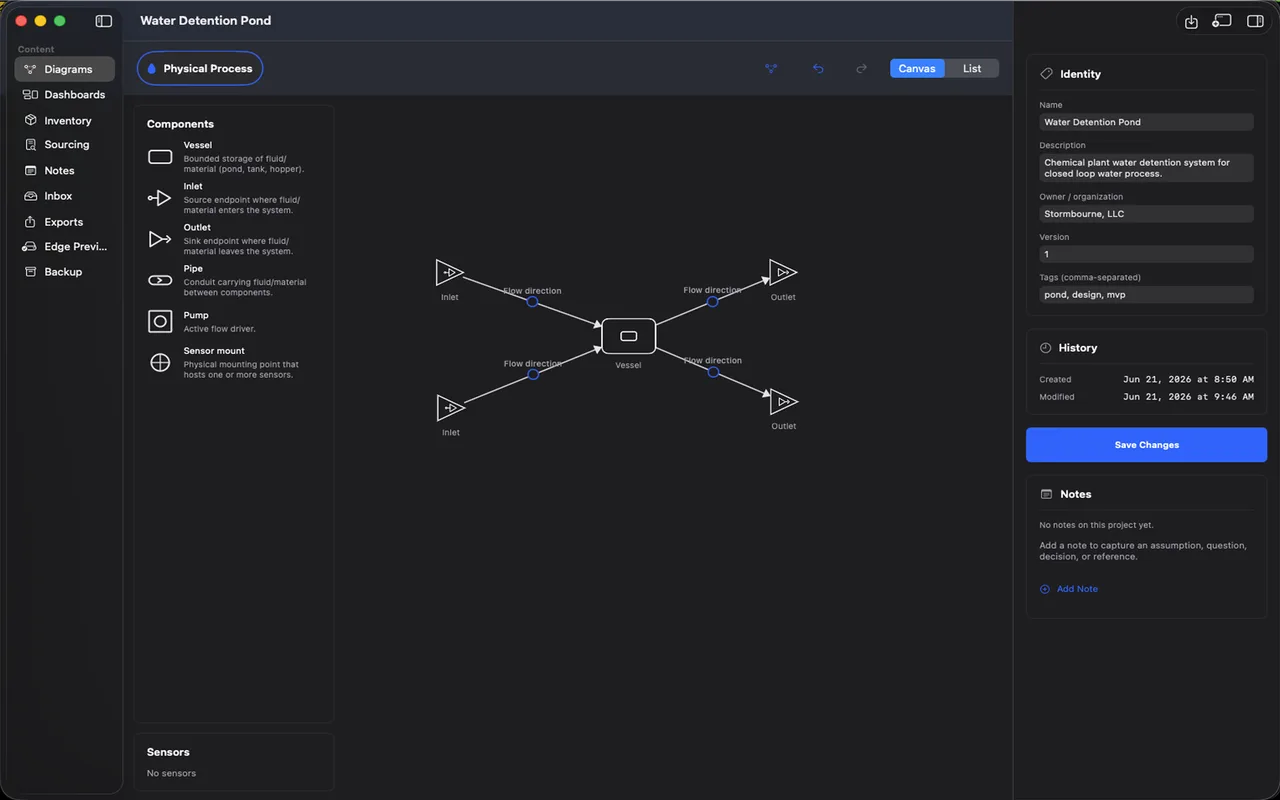
Studio
The experimental design system: model a real-world system, draft its control topology, mock up operator HMIs, and produce industrial-quality documentation. Standalone by design — the edge is optional.
DesignPre-release
Mac · iPad · iPhone · Windows
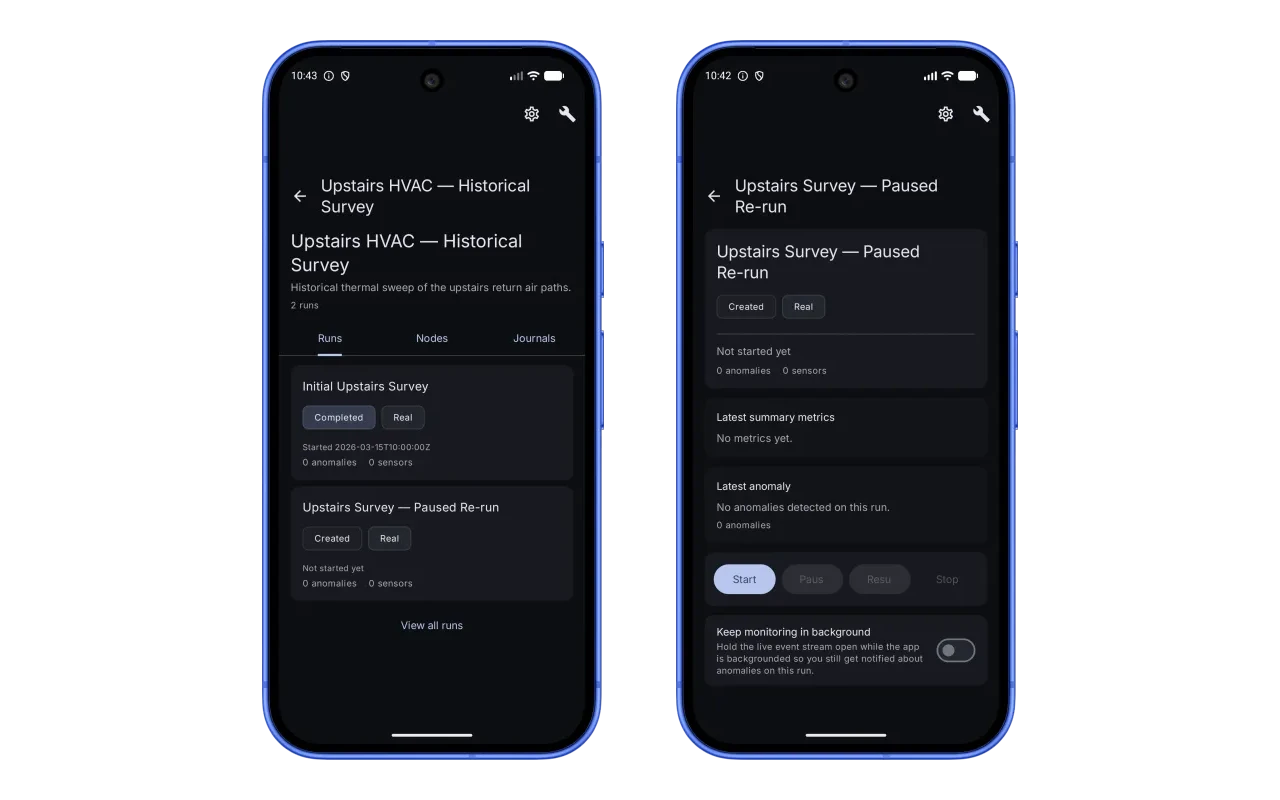
Field
Studio for the field, on hardware that survives it. Field authors a real Studio project on site — no server, no Mac, no network — then adds an optional Edge companion, on rugged Android hardware.
Design · in the fieldEarly access
Android
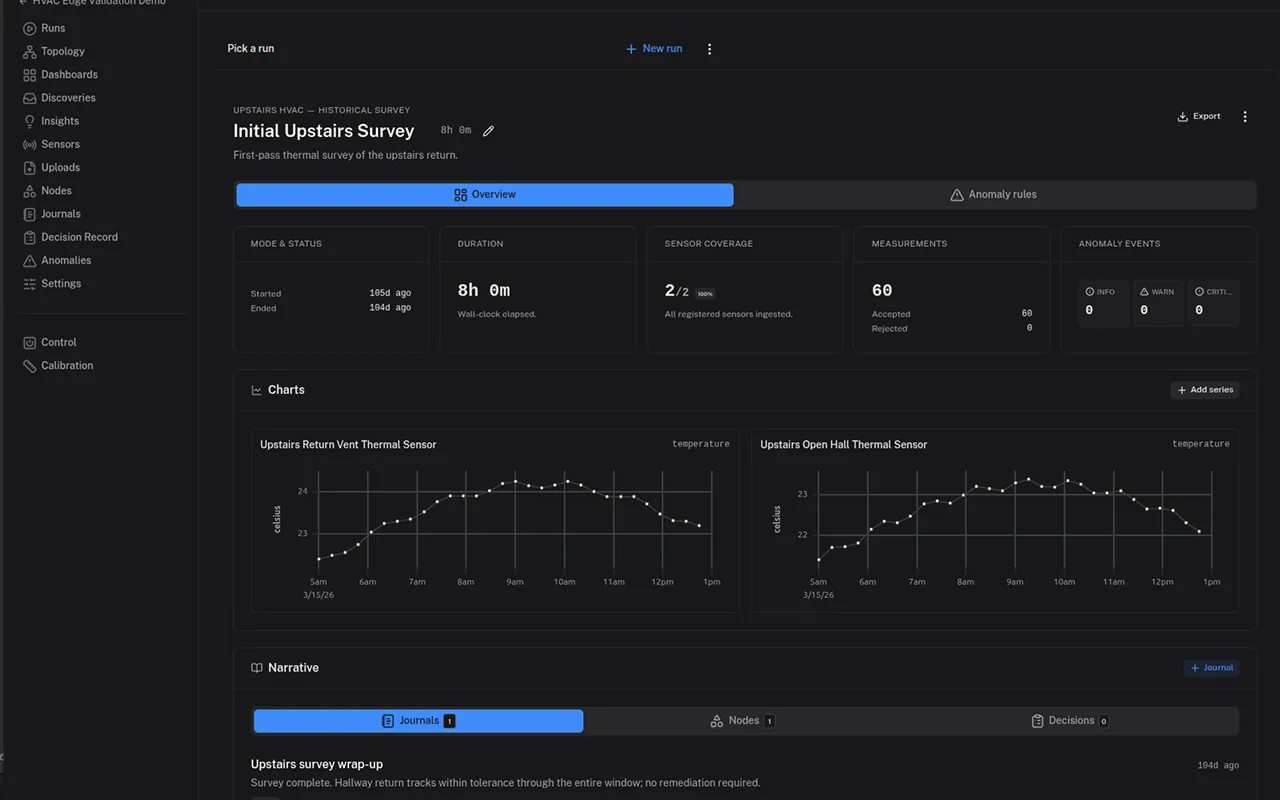
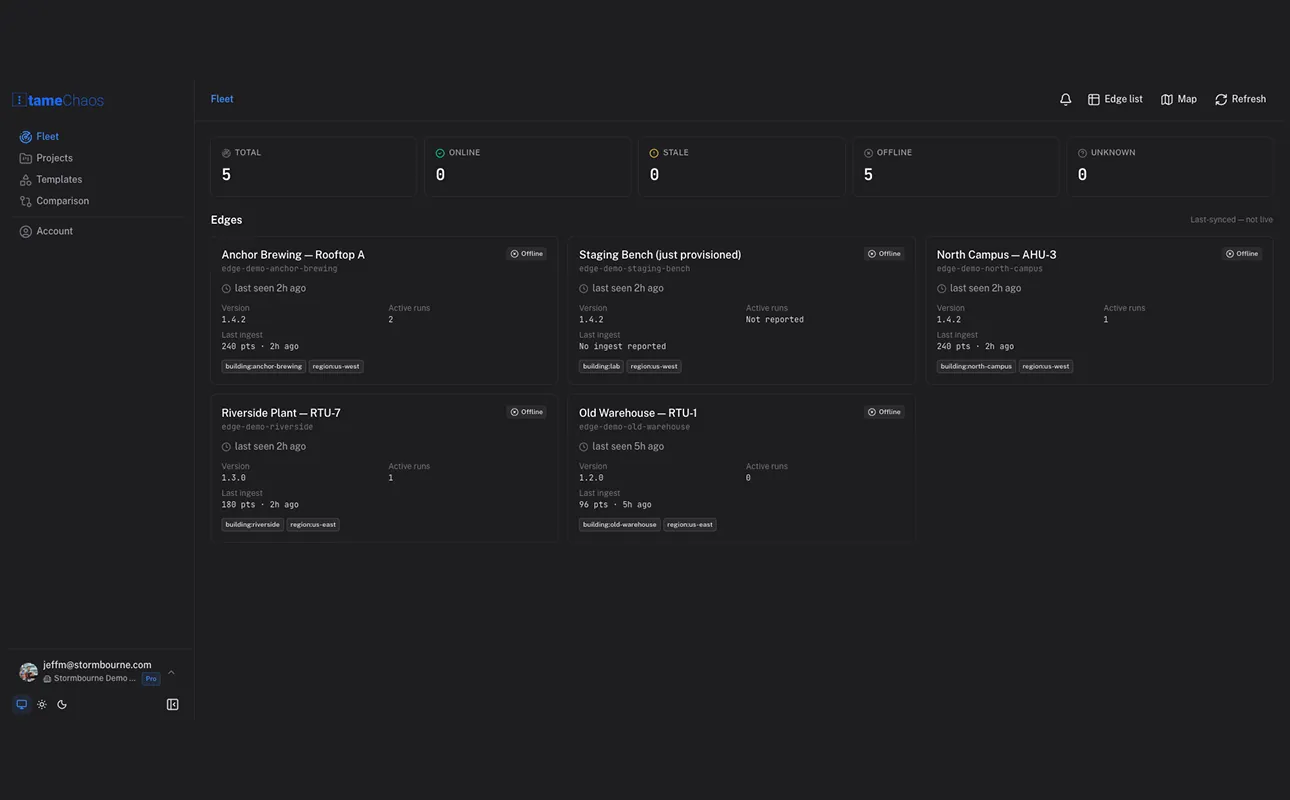
Where to start
Four entry points, not four steps. There is no step 1 — you can stay in one product indefinitely.
Platforms
One core, five platforms
Studio runs on Mac, iPad, iPhone, and Windows. Field is the same core on Android, plus capability the other platforms don't have — which is why it's its own product, not a fifth Studio build.
| Capability | MacStudio | iPadStudio | iPhoneStudio | WindowsStudio | AndroidField |
|---|---|---|---|---|---|
| Full authoringCanvas topology editing, HMI mockups, and documentation export on a large screen. | Yes | Yes | No | Yes | No |
| Field captureThe same project navigator in compact form, with node-first capture — photo, evidence, and provenance — straight into the diagram. | No | No | Yes | No | Yes |
| Edge companionLive runs, anomalies, journals, and role-gated run control when a project has a paired edge. | No | No | No | No | Yes |
Studio and Field are pre-release; this is the platform scope of the first release. A Studio project is the same project on every platform — you can start it on a phone in a plant and finish it on a workstation.
How they fit
Peers, not a pipeline
Field capture authors straight into a Studio project, and Studio can export to the edge — but it isn't a single left-to-right sequence. Three facts let you adopt one product or all of them, in any order:
One shared core, distinct products
Studio and Field are distinct products built on the same design core and the same project format — and both stand alone, with no server or network required. Field adds what the other platforms don’t have: an optional Edge companion, and rugged hardware.
The edge is authoritative
The edge server owns execution — it runs your experiments. The cloud only observes and aggregates; it never starts, stops, or commands a run.
Your fleet, your data
Aggregation and model improvement are scoped to a single owner's fleet. Your fleet learns only from its own operation — no cross-tenant data or model sharing.
Why Studio leads, and what it doesn't mean
Studio comes first because it's the most common starting point — the edge is reordered in sequence, not in importance, and it remains the authoritative runtime. Studio owns design-time authority; the runtime owns execution; the two meet at a project package that describes itself. A design never overrules what a running system measures.
Start anywhere
Adopt one product or the whole ecosystem — in whatever order fits your work. This is the marketing front door; the platform lives in the app.